What the Archivists Know That You Don't: Secrets From the People Who Preserve Games for a Living
Most retro collectors have a system. Maybe it's alphabetical. Maybe it's by console, by genre, by the order stuff came off the shelf at the Goodwill. It feels organized. It feels right. But according to the professionals who actually preserve gaming history for a living, "feels right" is doing a lot of heavy lifting — and a surprising number of well-intentioned collections are quietly organizing themselves into irrelevance.
We reached out to archivists and preservation specialists connected to institutions like the Video Game History Foundation and university digital media programs to get a candid look at how the pros think about this stuff. What came back was part crash course, part gentle intervention.
The First Problem: You're Collecting Objects, Not Records
Here's something that doesn't come up much in collector communities: the physical cartridge or disc is only half the story. Professional archivists treat every item as a record — meaning the object itself and the documentation around it are equally important.
"When something comes into a proper archive, we're not just logging that it exists," explained one digital preservation specialist with experience cataloging donated game collections. "We're capturing provenance. Where did it come from? Who owned it? Is there anything unusual about this specific copy? That context is what transforms an object into a historical artifact."
For most hobbyists, that kind of metadata never gets written down. A complete-in-box copy of EarthBound is valuable on its own, sure. But if that copy came from the original retail store that sold it in 1995, or has a receipt tucked in the box, or belonged to someone notable — and none of that gets documented — that history evaporates the moment the collection changes hands.
The fix is simpler than it sounds. A basic spreadsheet with fields for acquisition date, source, and any known history is infinitely better than nothing. Cloud-backed is better still.
Metadata Standards Aren't Just for Libraries
The word "metadata" makes people's eyes glaze over, but stick with it for a second because this is where professional archivists part ways most dramatically from hobbyist culture.
Institutions that take game preservation seriously — the Library of Congress, university special collections, dedicated foundations — use standardized cataloging formats. These aren't arbitrary. They exist so that information about one collection can be compared against, searched alongside, and eventually merged with information from other collections. It's what makes a database actually useful decades later.
The Video Game History Foundation has been vocal about this in their public advocacy work: the fragmentation of preservation efforts is one of the biggest threats to gaming history. Individual collectors doing their own thing, in their own format, with their own abbreviations, creates silos. Important information gets locked inside systems nobody else can read.
You don't need to become a professional cataloger. But adopting something like the VGHF's own documentation recommendations — or even just using a widely-shared community database like GameFAQs or MobyGames as a reference backbone — puts your records in conversation with a larger ecosystem.
The Condition Conversation Nobody Wants to Have
Collectors love grading condition. PCB grades, label grades, box grades — there's a whole language for it. What professional archivists notice, though, is that condition documentation in hobbyist collections almost always focuses on market value rather than preservation risk.
Those are not the same thing.
A cartridge with a pristine label but a battery that hasn't been checked in fifteen years is a ticking clock. A disc that looks flawless but has been stored in a sleeve that off-gasses plasticizers is degrading right now. A box that grades highly by collector standards might be one summer in a hot garage away from structural failure.
"We assess for risk, not just appearance," one archivist put it. "The question isn't 'what does this look like today?' It's 'what is this going to look like in twenty years if nothing changes?'"
Building a simple risk column into your collection records — battery replaced/not replaced, storage conditions, known heat or humidity exposure — shifts your documentation from a price guide into something that actually helps the collection survive.
Digital Backups Are Not Optional Anymore
This one tends to land with a thud in certain collector circles, but professional archivists are pretty unambiguous about it: if you care about the content on your cartridges and discs, you should have a digital backup.
This isn't about emulation or piracy debates. It's about the basic reality that magnetic and optical media degrades. Cartridge batteries die. Disc rot is real. The physical object is not a permanent storage medium, and treating it as one is a preservation choice with a foreseeable end.
Institutions that preserve games seriously dump ROMs and disc images as a matter of standard practice. They also document the dump — what hardware was used, what software, what date, what the hash value of the resulting file is. That last part matters because it lets you verify later that the file hasn't been corrupted or altered.
For a home collector, this doesn't have to be complicated. A cartridge reader, a free dumping utility, and an external hard drive with offsite backup is a real setup that real people run. It's not the same as a professional archival workflow, but it's vastly better than hoping the physical media holds forever.
Why Your Organization System Might Be Working Against You
Alphabetical by title seems sensible until you realize that future researchers — or future you, or your kids, or whoever ends up with this collection — might need to find things by platform, by developer, by release year, or by any number of axes your current system doesn't support.
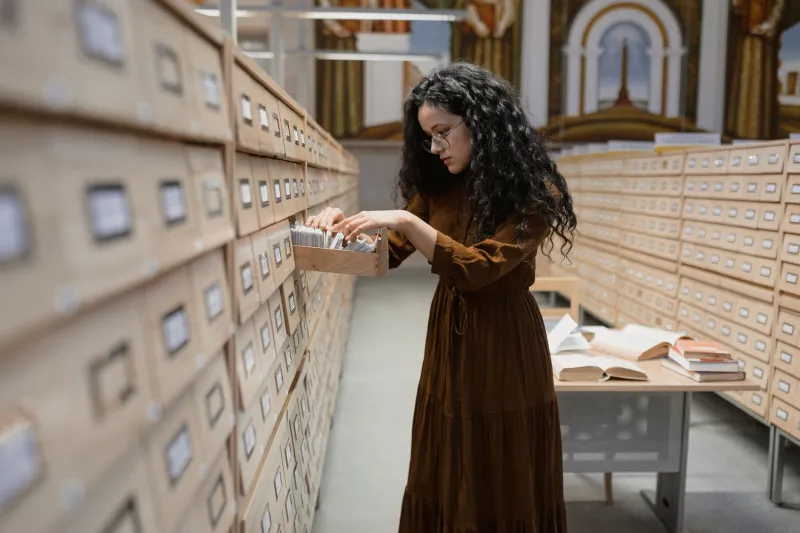
Professional archives build collections around flexible, searchable records rather than a single physical arrangement. The physical storage is almost secondary to the database. You can move boxes around; what you can't easily reconstruct is the information that was never recorded in the first place.
The practical takeaway: your physical organization can be whatever works for your space. But your records should be rich enough that someone could make sense of the collection without you in the room to explain it.
The Biggest Thing Archivists Wish Collectors Understood
Every archivist we spoke with circled back to the same core idea: the goal of preservation is transmission. You're not just keeping things for yourself. You're keeping them for people who don't exist yet.
That reframe changes a lot. It means documentation isn't busywork — it's the actual point. It means thinking about what happens to your collection when you're not around to curate it. It means recognizing that a collection without records is just stuff.
None of this requires a professional degree or an institutional budget. It requires treating your collection less like an investment and more like a library. Which, if you think about what retro gaming actually is — a living archive of a medium's entire history — seems about right.