Dug Up and Priced Up: How the Atari Excavation Broke the Retro Market's Brain
April 2014. Alamogordo, New Mexico. A documentary film crew, a crowd of curious onlookers, and a backhoe operator who probably had no idea he was about to make gaming history. When the excavation confirmed what had been rumored since 1983 — that Atari had indeed buried thousands of unsold cartridges in a desert landfill — the retro gaming world celebrated. A legend had been verified. The story was real.
What followed was considerably messier than the celebration suggested it would be.
The Myth Was Always Better Than the Discovery
Before the dig, the Atari burial story occupied a specific and comfortable place in gaming culture. It was the creation myth of the video game crash, a dramatic physical metaphor for an industry that had overextended itself into collapse. E.T. the Extra-Terrestrial, the game at the center of the legend, had been crowned the worst game ever made — a title it arguably didn't deserve but wore regardless, because the story needed a villain.
The thing about myths is that they function best when they're unverifiable. The Atari burial story, as long as it remained unconfirmed, could be whatever the teller needed it to be. An industry cautionary tale. A symbol of corporate hubris. A punchline. Once the excavation happened and documentary footage showed actual crushed cartridges being pulled from New Mexico soil, the myth became a fact — and facts are subject to scrutiny in ways that myths aren't.
Almost immediately, the questions started. How many cartridges were actually there? What titles were represented? Were they truly unsold overstock, or something more complicated? The answers that emerged complicated the tidy narrative considerably. Multiple titles were present, not just E.T. The quantity was significant but not the apocalyptic millions the legend had implied. And the excavation produced something nobody had quite anticipated: a sudden surge of interest in Atari-era collecting that sent prices in directions the market wasn't prepared for.
The Price Spike Nobody Predicted
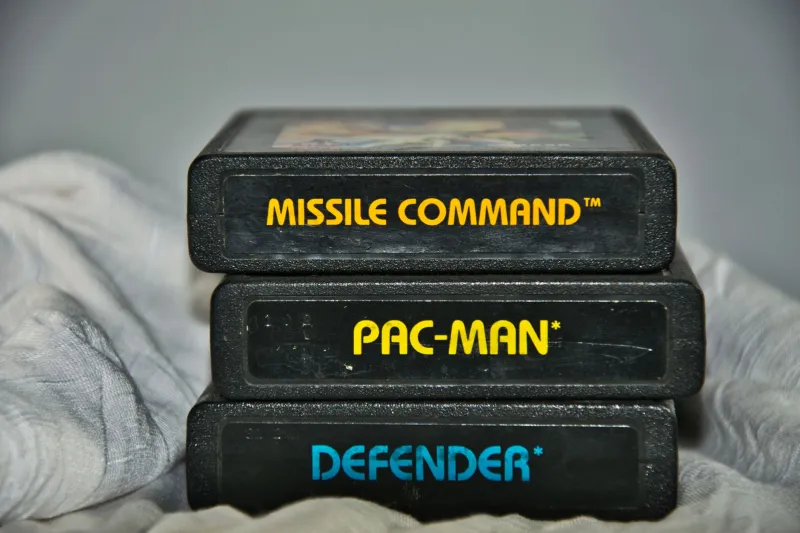
Here's the thing about scarcity in collecting markets: it's often as much about perception as reality. The Atari excavation didn't actually change the supply of vintage Atari games in any meaningful way. The cartridges recovered were distributed through a combination of auction, museum donation, and documentary promotion — a relatively small number of items entering a market that already had millions of Atari 2600 cartridges floating through it.
But it absolutely changed perception. The excavation was covered by mainstream outlets. It trended on social media. People who hadn't thought about Atari since childhood suddenly remembered their old 2600 setups and started wondering what those games might be worth. A wave of casual sellers hit eBay, which created a wave of casual buyers, which created the impression of a hot market, which made actual collectors nervous about prices moving against them.
E.T. cartridges specifically saw price movement that defied any rational market logic. A game that had been essentially worthless — available at any thrift store for a quarter, if anyone wanted it at all — suddenly had people paying real money for standard retail copies. Not excavated copies, mind you. Just regular E.T. cartridges that had been sitting in closets for thirty years. The documentary attention had transformed a universally available item into something that felt scarce simply because people were paying attention to it.
Authentication Paranoia Sets In
The excavation also introduced a new anxiety into Atari collecting that hadn't been particularly prominent before: authentication paranoia. With actual landfill-recovered cartridges now theoretically in circulation — some sold at auction, others distributed through the documentary's promotional activities — the question of how to distinguish a legitimate excavated cartridge from a regular retail copy became suddenly relevant.
The answer, it turned out, was: with great difficulty. The excavated cartridges showed physical damage consistent with years of burial — label deterioration, case damage from compression, soil residue. But those characteristics could theoretically be replicated, and the collector community knew it. Forum discussions about how to verify provenance for excavated Atari cartridges appeared almost immediately after the dig concluded.
This was new territory. Atari 2600 collecting had always been relatively low-stakes from an authentication standpoint. The games were common, the hardware was well-documented, and the most valuable items in the catalog were expensive enough to warrant scrutiny but not so valuable that sophisticated forgery was particularly worthwhile. The excavation changed the calculus by creating a category of item — excavated cartridges with documented provenance — that commanded a premium significant enough to make fakery potentially worth attempting.
What the Market Actually Learned
A decade out from the Alamogordo dig, it's possible to assess what the event actually taught the retro collecting world. Some lessons were practical. The excavation demonstrated how rapidly mainstream media attention can distort niche collecting markets — a dynamic that would repeat itself with the sealed game auction boom of the early 2020s, when graded and sealed NES games started selling for prices that strained credulity.
Other lessons were more philosophical. The Atari burial story had functioned as a shared cultural touchstone for the gaming community, and its confirmation — while satisfying in the moment — stripped it of some of the imaginative power it had carried as an unverified legend. Once you've seen the actual crushed cartridges, the story becomes smaller, not larger.
Perhaps most importantly, the excavation illustrated how scarcity narratives shape collecting economics in ways that have little to do with actual supply. The retro market runs on a combination of genuine rarity, nostalgia, and story — and story might be the most powerful of the three. A cartridge with an interesting history commands more than the same cartridge without one, regardless of how that history affects the physical object.
The E.T. cartridges buried in New Mexico were worthless when they went in the ground and worthless when they came out — as games, anyway. As artifacts of a specific moment in gaming history, they became something else entirely. That transformation says more about how collecting works than any price guide ever could.
The Pandora's Box Is Still Open
The ripple effects from 2014 haven't fully settled. The mainstream attention the excavation brought to retro gaming contributed to a broader cultural reassessment of vintage games as collectibles rather than just nostalgic toys. That reassessment drove prices across the entire market upward through the late 2010s, creating both opportunities for early collectors who'd accumulated inventory and barriers for newcomers trying to enter the hobby affordably.
Whether that's good or bad for retro gaming depends enormously on where you were standing when the shovel hit the dirt.