Still Dreaming: Why Sega's Most Infamous Failure Became One of Collecting's Biggest Success Stories
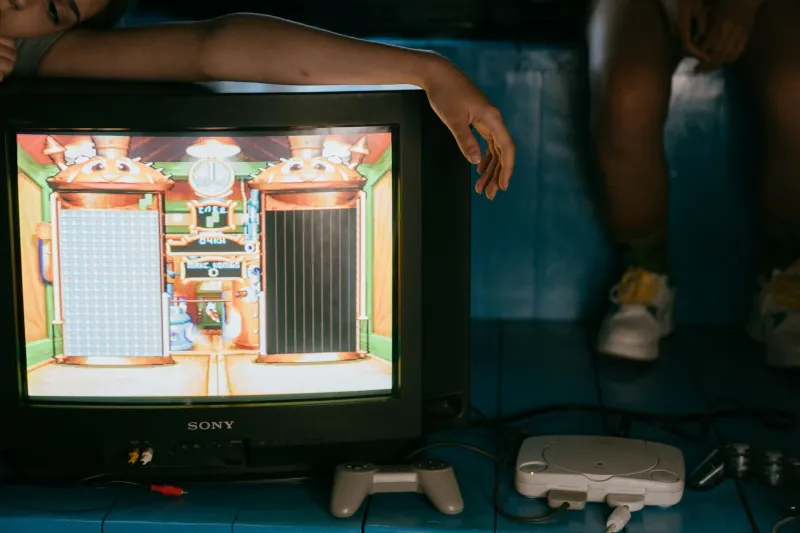
By every corporate measure, the Dreamcast was a catastrophe. Sega pulled the plug in 2001, less than two years after the North American launch, and walked away from the hardware business entirely. The PlayStation 2 had arrived, the Xbox was coming, and the math simply didn't work anymore. It was over.
Except it wasn't. Not even close.
Walk into any serious retro collector's setup today and there's a decent chance that little white box is sitting right in the middle of it — powered on, played regularly, and surrounded by a library that keeps growing. Yes, growing. In 2024. That's the Dreamcast story that doesn't get told enough, and it's one that says a lot about how collectors assign value in ways that corporate balance sheets never could.
The Price of Entry Is Still Sane
One of the first things that draws collectors to the Dreamcast is something genuinely rare in today's retro market: you can still afford to actually build a collection without refinancing your house.
While SNES cartridges and CIB Nintendo 64 titles have hit prices that would make a Wall Street trader wince, the Dreamcast library remains comparatively accessible. Sure, there are outliers — Marvel vs. Capcom 2 and a handful of Japanese imports carry real premium price tags — but the bulk of the catalog is still sitting in the $10-to-$40 range. For a console with a library this strong, that's almost absurd.
Part of that accessibility comes down to sheer production numbers. Sega manufactured a lot of GD-ROMs before the lights went out, and the format's relative obscurity means the casual flip-for-profit crowd hasn't completely strip-mined the market yet. Estate sales, thrift stores, and flea markets still surface Dreamcast games regularly, and that makes the whole collecting experience feel like it used to — like a hunt, not an auction.
The Homebrew Scene That Never Quit
Here's where the Dreamcast story gets genuinely remarkable. While other consoles of the same era have small but dedicated homebrew followings, the Dreamcast's independent development community has produced a volume and quality of work that rivals some officially supported platforms.
The console's design actually helped make this happen. The Dreamcast shipped with a built-in modem, a relatively developer-friendly architecture, and — crucially — a GD-ROM format that was cracked early enough that burned CDs could run unsigned code without any hardware modification. That last part is huge. Unlike nearly every other retro platform, a stock Dreamcast can boot homebrew software straight from a burned disc. No soldering, no chips, no voided warranty (not that warranty matters now). You just burn and play.
That low barrier to entry helped cultivate a homebrew scene that's been releasing original games, ports, and technical demos for over two decades. Recent years have brought fully realized new titles — original games built specifically for the hardware — alongside impressive ports of games the console never officially received. The community releases new software regularly, and some of it is genuinely excellent. This isn't nostalgia tourism. People are actively making new things for a 25-year-old console because the platform is still worth building for.
The Games Themselves Hold Up Remarkably Well
Let's be honest about something that sometimes gets lost in the collector conversation: the Dreamcast library is legitimately great.
Shenmue essentially invented the open-world action RPG as we know it today. Jet Set Radio defined a visual style that indie developers are still chasing. Soul Calibur was so far ahead of other console fighting games at launch that reviewers ran out of superlatives. Crazy Taxi, Power Stone, Ikaruga, Skies of Arcadia — this is a catalog that would make any console proud, assembled from a machine that supposedly failed.
For collectors, that quality matters. A shelf full of games you actually want to play is a different proposition than a shelf full of games you're holding as investments. The Dreamcast leans hard toward the former, which creates a different kind of collector culture — one built more around passion and less around speculation.
What "Failure" Actually Means
The corporate narrative around the Dreamcast is worth pushing back on, because it shapes how people perceive the console in ways that don't always reflect reality.
Sega lost money. That's true. But the Dreamcast also shipped around 10.6 million units globally, built a library of genuinely innovative software, pioneered online console gaming in North America with its built-in modem, and inspired a generation of developers who went on to shape the industry. By almost any measure other than profit margin, the Dreamcast was a success.
Collectors figured this out early. While the mainstream gaming press was busy writing obituaries in 2001, a dedicated fanbase was quietly hoarding game libraries and keeping their consoles running. The community never really grieved the Dreamcast because they never really accepted that it was gone.
Hardware That's Easier to Maintain Than You'd Think
One practical concern that comes up with any retro collector conversation is hardware longevity, and the Dreamcast has a reasonably good story to tell here too.
The GD-ROM drive is the main vulnerability — optical drives wear out, and replacements aren't infinite. But the community has addressed this directly. GDEMU, a popular optical drive emulator that runs games from an SD card, has become a standard modification for serious Dreamcast collectors. It eliminates drive noise, load times, and the single biggest point of hardware failure all at once. Installation is straightforward enough that anyone comfortable opening a console can handle it.
Beyond that, the Dreamcast is a relatively simple machine to service. Capacitor kits are available, the controller ports are repairable, and the community maintains detailed documentation for common issues. Compared to some consoles of the same era — which require increasingly rare proprietary components — the Dreamcast is almost refreshingly fixable.
Why This Console Keeps Winning
The Dreamcast endures because it hits a specific combination of qualities that collectors genuinely value: an accessible price point, a library you actually want to play, a hardware platform that's maintainable and mod-friendly, and a community that's been adding to the experience for twenty-plus years.
That's not an accident of nostalgia. It's a genuine value proposition that holds up on its own terms, independent of whatever Sega's accountants decided in 2001.
Sega stopped dreaming. The collectors never did. And in the retro market, that turns out to matter a whole lot more than a quarterly earnings report.