Hot and Cold: The Invisible Force Quietly Wrecking Your Cartridge Collection
You locked down your shelves. You bagged your manuals. You even sprung for a UV-filtering display case that cost more than your first car payment. But if your collection is living in a spare bedroom, a basement, or — god forbid — a garage, you may be watching years of hunting and hundreds of dollars quietly dissolve into nothing, one temperature swing at a time.
Thermal cycling. It sounds like something a refrigerator repairman worries about, not a guy with three shelves of Super Nintendo carts. But it's one of the most destructive forces in retro preservation, and it's happening to collections all across the country right now — during summer heat waves, winter cold snaps, and every dramatic swing in between.
What Thermal Cycling Actually Does to a Cartridge
Here's the basic physics: every material inside a cartridge — the PCB substrate, the solder joints, the ROM chip itself, the plastic shell — expands when it heats up and contracts when it cools down. Do that once? No big deal. Do it hundreds of times across several years, which is exactly what happens when a cartridge sits in a room that fluctuates between 55°F in January and 90°F in August, and you're essentially stress-testing microscopic connections that were never designed to flex.
Solder joints are particularly vulnerable. The lead-tin alloy used in vintage cartridges from the '80s and '90s is actually more durable than modern lead-free solder in some respects, but repeated thermal stress creates micro-fractures over time. These fractures don't always kill a game outright — they cause intermittent failures, corrupted saves, and the kind of mysterious "it works sometimes" behavior that drives collectors absolutely crazy.
The PCB traces themselves aren't immune either. Copper traces are bonded to a fiberglass substrate, and when those two materials expand and contract at slightly different rates — which they do, because they have different coefficients of thermal expansion — you get delamination. Tiny separations between the trace and the board. Again, not immediate death, but cumulative damage that compounds with every passing season.
The Label Problem Nobody Talks About
Cartridge labels are a whole separate disaster. The adhesive used on original Nintendo, Sega, and Atari labels was designed for a pretty stable environment. It was not designed for a garage in Phoenix that hits 110°F in July or a New England basement that drops to 40°F by November.
Heat softens the adhesive, letting labels bubble, peel at corners, and shift. Cold makes it brittle and prone to cracking when the cartridge is handled. Humidity — which almost always travels with temperature swings — gets under the paper label itself and causes warping, foxing (those brown age spots), and eventually that dreaded full detachment.
A complete, clean label is often the difference between a cartridge worth $20 and one worth $200. Thermal cycling is systematically destroying that value in collections that aren't properly managed, and most collectors don't realize it until they pull something off the shelf and the label comes with it.
Real-World Failures: What Collectors Are Actually Seeing
Talk to anyone who's been collecting for more than a decade and they'll have a story. A childhood collection stored in the attic — the plastic shells warped and yellowed, the labels half-gone. A haul from an estate sale that looked mint in photos but arrived with labels bubbled from one too many Texas summers. A battery-backed SNES cart with a save that corrupts every few months because the solder joint on the backup battery has been thermally stressed into unreliability.
Preservation communities on forums like AtariAge and Reddit's r/gamecollecting are full of these accounts. What's striking is how consistent the geography is — collections in the American South, the desert Southwest, and the upper Midwest tend to show the worst thermal damage, because those regions have the most dramatic seasonal and even daily temperature swings.
Florida is a particular nightmare because it layers humidity on top of heat. The Gulf Coast and Southeast generally are rough on paper-based materials like manuals and labels. But don't assume a mild climate means you're safe — any space without active climate control is subject to enough fluctuation to cause long-term damage.
The Myth That Climate Control Is Only for Serious Collectors
This is the part where a lot of collectors check out, assuming what follows is a pitch for a $3,000 HVAC upgrade and a dehumidifier the size of a refrigerator. It isn't.
The goal isn't to build a museum-grade archive. The goal is stability. A collection that stays between 60°F and 75°F with relative humidity between 40% and 55% is going to last dramatically longer than one that swings wildly, even if neither environment is technically "perfect." Consistency matters more than hitting an exact number.
Here's what that actually looks like in practice:
A dedicated closet beats a shelf in an unconditioned space every single time. Interior closets in conditioned living spaces are naturally more stable than rooms with exterior walls, basements, or attics. If you're already in a climate-controlled house, moving your collection to an interior closet is free and genuinely effective.
A small dehumidifier is cheap insurance. A decent mid-size dehumidifier runs $150–$250 and can protect a room-sized collection. Pair it with a $15 digital hygrometer and you'll actually know what's happening in your storage space rather than guessing.
Sealed storage slows the cycling. Cartridges stored in sealed cases or bins with a silica gel packet inside experience the ambient temperature changes more slowly, which reduces the stress even if it doesn't eliminate it. It's not a substitute for climate control, but it's a meaningful improvement over open shelving.
Keep things away from exterior walls and windows. These are the hottest spots in summer and the coldest in winter. The temperature differential near an exterior wall can be 10–15°F different from the center of the same room.
Battery-Backed Games Deserve Extra Attention
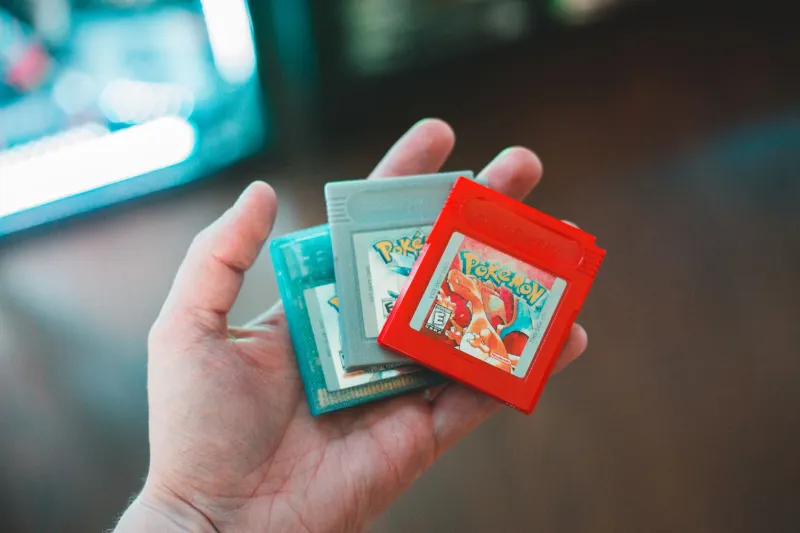
If you own battery-backed titles — your RPG saves, your Zelda adventures, your Pokémon cartridges — thermal cycling adds an extra layer of urgency. The solder joint connecting the backup battery to the PCB is one of the smallest and most mechanically stressed points in the whole cartridge, and it's also the one that matters most for keeping your saves alive.
If you haven't already, seriously consider having those batteries replaced by someone who knows what they're doing. A fresh battery in a properly soldered joint, stored in a stable environment, should give you another couple of decades of reliable saves. A degraded battery in a thermally stressed joint is a ticking clock.
Your Collection Is a Long-Term Investment in History
Retro cartridges aren't being manufactured anymore. What exists is what exists, and every copy that degrades past playability or collectibility is a small piece of gaming history gone for good. Whether you're a serious preservationist or just someone who wants their childhood favorites to still work when they pull them out in twenty years, the physics don't care about your intentions.
The good news is that thermal cycling is a problem you can actually do something about without spending a fortune. A little awareness, a modest investment in environmental control, and some thoughtful storage habits can extend the life of your collection by decades.
Your games survived the '90s, the garage sales, and the eBay era. Don't let a hot attic be what finally takes them out.