Sticker Shock at the Swap Meet: The Forces Driving Retro Game Prices Through the Roof
Not that long ago, you could walk into a flea market with a twenty-dollar bill and walk out with a grocery bag full of NES games. Those days are gone — and depending on who you ask, they're either gone temporarily or gone for good. The retro game market has spent the last several years doing something that frustrates newcomers and baffles longtime collectors alike: going up, and mostly not coming back down.
So what actually happened? The honest answer is that several different forces hit the market at roughly the same time, and they're still sorting themselves out.
The Supply Side Got Squeezed Hard
The most straightforward piece of this is simple supply and demand. The number of authentic NES and SNES cartridges in the world is fixed. Nintendo isn't making more. And the channels through which those cartridges used to flow into the market — estate sales, storage unit auctions, garage sales, thrift stores — have been picked increasingly clean.
The storage unit pipeline in particular has changed dramatically. A decade ago, storage unit auction hunters were a niche crowd. After the reality TV boom around shows like Storage Wars, that world got a lot more crowded, and people started specifically hunting for gaming hauls. The easy finds dried up. What's left is getting harder to source and more expensive when it surfaces.
Thrift store pricing has shifted too. Goodwill and similar chains now route valuable-looking items through their online auction platforms rather than putting them on the floor at flat prices. That means the days of finding a Chrono Trigger cartridge for three dollars because a volunteer didn't know what it was are largely over. The platforms know what things are worth, or at least they know enough to send them to auction.
The Pandemic Did Something Weird to the Market
The COVID-19 lockdown period had an outsized effect on retro game prices that the market still hasn't fully digested. Stuck at home with stimulus checks, a significant wave of people turned to nostalgia — and specifically to the games they grew up with. Demand spiked sharply at exactly the moment when supply chains were disrupted and in-person sourcing events like flea markets and conventions were shut down.
Prices jumped. Some of that jump was real demand. Some of it was speculation — people buying games as assets rather than to play them, betting that prices would keep climbing. Heritage Auctions and Wata Games made headlines with record-breaking sales that had nothing to do with what a game was worth to someone who wanted to actually play it.
The speculation bubble has deflated somewhat since its peak, but it didn't fully collapse. Prices came down from their most absurd highs but didn't return to pre-2020 levels. What we're left with is a market that's genuinely more expensive than it was five years ago, even after stripping out the froth.
The Reproduction Problem Is Real and It's Complicated
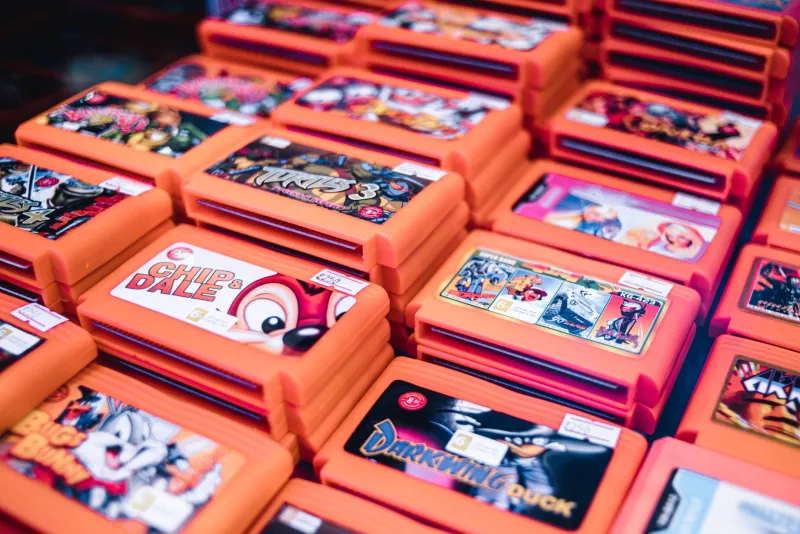
Anyone shopping for retro games online has encountered the reproduction cartridge problem. Chinese manufacturers have gotten extremely good at producing fake cartridges — shells, labels, PCBs — that can fool casual buyers and sometimes even experienced ones. eBay and similar platforms are flooded with these.
The effect on the legitimate market is double-edged. On one hand, reproductions suppress prices for games where buyers can't easily verify authenticity. On the other hand, they've made collectors more cautious and pushed demand toward verified, graded copies — which has actually inflated prices at the top of the market.
The grading services like WATA and VGA have benefited from exactly this dynamic. Collectors willing to pay a premium want proof of authenticity, and a sealed grade provides that. Whether a graded game is "worth" what it sells for is a separate question, but the market has been clear that it will pay for certainty.
International Shipping Bottlenecks Added Fuel
A less-discussed factor is the role of international sourcing in the retro game supply chain. Japan in particular has historically been a major source of affordable retro hardware and software for American collectors — Japanese cartridges for region-free games, Japanese hardware in better condition than domestic equivalents, accessories that were never released in the US.
Shipping costs and transit times from Japan ballooned during the pandemic and have not fully normalized. Sellers on Japanese platforms like Yahoo Auctions Japan — accessed by American buyers through proxy services — are dealing with higher shipping costs, longer transit times, and increased customs scrutiny. That supply line got more expensive, and American prices reflect it.
Which Games Are Trapped in Bubble Territory
Not all retro games are equally distorted. A few patterns have emerged around which categories are most likely to be overpriced relative to their genuine demand.
RPGs for the SNES and late-era NES are probably the most inflated category. EarthBound, Final Fantasy III (VI), Chrono Trigger, the Ogre Battle series — these have passionate fanbases and genuine scarcity, but their prices have been amplified significantly by speculation and media coverage. They're real collectibles, but the gap between what a player would pay and what a speculator has pushed the price to is wide.
Big-box PC games from the late 80s and early 90s have seen similar dynamics. So have complete-in-box versions of anything — the box and manual premium over cartridge-only has expanded considerably as the completionist collector crowd has grown.
By contrast, common-label NES sports games and mid-tier platformers are probably priced closer to their real market value. There's less speculation premium there because there's less mystique.
When Does It Stabilize?
The honest forecast is: it depends on the game. For the most speculated-upon titles — the ones that got featured in auction house press releases and YouTube thumbnail bait — there's likely still some air to let out. Graded game prices have already come down meaningfully from 2021 peaks.
For the broader market, the floor has probably risen permanently. The infrastructure that used to funnel cheap games into the market — naive thrift store pricing, uninformed garage sale sellers, storage unit wildcards — has been eroded by information. Sellers know what things are worth now, or they know enough to find out before pricing.
The practical upshot for collectors: the era of casual cheap finds is over for most of the desirable stuff. Building a collection now requires either accepting current market prices, developing sourcing relationships that predate the pricing shift, or getting very good at finding things before the algorithms do. That's a different hobby than it was five years ago — not worse, necessarily, but definitely different.