Glitch Hunters: How Speedrunners Accidentally Became Gaming's Most Unlikely Archivists

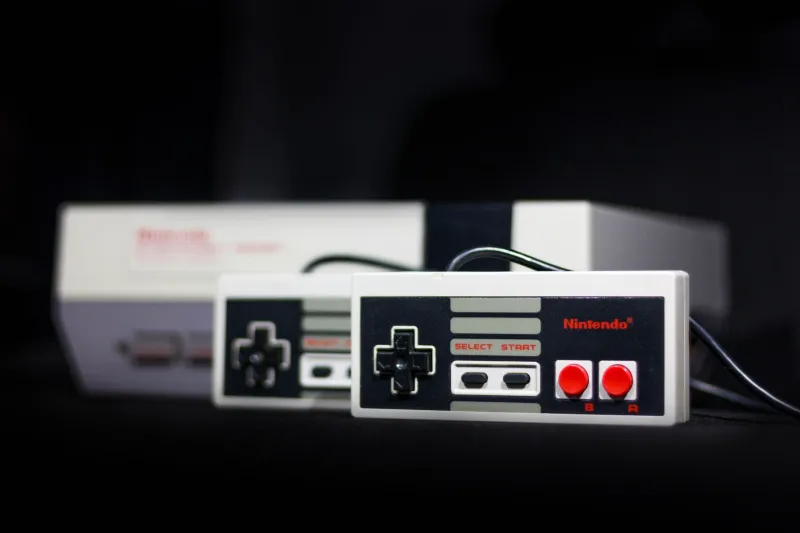
Photo by Photo by Tai's Captures on Unsplash on Unsplash
There's a moment in almost every speedrun where something goes beautifully, inexplicably wrong — the kind of wrong that shaves forty seconds off a world record and sends a Twitch chat into full meltdown. A wall clips. A sprite desyncs. An enemy forgets it's supposed to exist. For most viewers, it's a highlight reel moment. For a growing corner of the gaming community, it's a breadcrumb trail leading straight into the guts of a dying machine.
Speedrunners have always lived closer to the source code than the rest of us. They have to. But somewhere along the way, a subset of the community started treating that proximity less like a competitive edge and more like a responsibility. They're cataloguing glitches, reverse-engineering undocumented mechanics, and — whether they set out to or not — building one of the most detailed archives of obscure arcade history that exists anywhere.
And they're doing it before the clock runs out.
The Problem Nobody Wanted to Talk About
Here's something the gaming industry doesn't advertise: a staggering amount of classic arcade source code is simply gone. We're not talking about dusty backup tapes sitting in a warehouse somewhere. We're talking about genuinely, permanently lost — the original developers shuttered, the hardware junked, the floppies corrupted, the institutional memory scattered to the wind.
The Video Game History Foundation has been sounding this alarm for years, estimating that roughly 87% of classic games are out of print and essentially inaccessible through legitimate means. For arcade titles specifically — games that lived and died in smoky bowling alleys and mall food courts across America — the situation is often even grimmer. Many of these games were never sold in boxes, never ported to home consoles, and never got a second life on a digital storefront. They just... stopped.
What survives, in many cases, is the game itself — running on aging PCBs, emulated through painstaking reverse engineering, or documented in obsessive detail by the people who spent thousands of hours inside them.
Enter the speedrunners.
Knowing a Game Like That
To understand why speedrunners are uniquely positioned to do preservation work, you have to understand what deep familiarity with a game actually looks like at that level. We're not talking about someone who played Galaga a lot at a pizza place in 1983. We're talking about people who have mapped every frame of a game's logic, identified the precise pixel coordinates where a hitbox misbehaves, and documented the exact input sequence that causes a routine to skip itself entirely.
That kind of knowledge is preservation. It just hasn't always been labeled as such.
The speedrunning community around games like Bubble Bobble, Donkey Kong, and dozens of more obscure coin-op titles has produced documentation that surpasses anything officially released by the original developers. Frame data. Memory maps. Collision detection quirks. Stuff that would have lived in a programmer's notebook — if that notebook hadn't been thrown away thirty years ago.
Communities on SDA (Speed Demos Archive) and Speedrun.com have threads that read less like gaming forums and more like engineering white papers. The language shifts. People start talking about RNG seeds, pointer tables, and subroutine calls. It's technical in a way that most gaming coverage never touches, and it's producing real archival value.
When the Exploit Becomes the Evidence
One of the more fascinating wrinkles in this story is how glitches themselves have become primary sources. A glitch isn't just a bug — it's a window into how a game was actually built. When a speedrunner triggers a wrong warp in an obscure 1988 arcade title, they're inadvertently revealing something about the game's memory structure, its level-loading logic, the shortcuts a tired programmer took under a deadline.
That information matters. It's the kind of thing a preservation team can use to reconstruct how a game worked even when the source code doesn't exist. It's archaeological, in a way — reading the artifact to understand the civilization.
Some speedrunners have started collaborating directly with MAME developers and preservation-focused organizations specifically because of this. The runner documents the exploit in exhaustive detail. The emulation dev uses that documentation to validate or correct how the game runs in software. The result is a more accurate emulation, which is a more accurate historical record.
It's a pipeline that formed organically, out of shared obsession rather than any formal plan. That's very on-brand for both communities.
The Corporate Complication
Here's where things get thorny. A lot of the companies that originally published these arcade games still technically own them — even when those companies have been acquired, folded into conglomerates, or renamed beyond recognition. And corporate IP ownership has a way of complicating preservation efforts that would otherwise be pretty straightforwardly good for everyone.
There's a real tension between the legal right to control a piece of software and the cultural responsibility to keep it accessible. Speedrunners and preservation advocates tend to land firmly on the side of access. Their argument — and it's a compelling one — is that a game nobody can play, documented nowhere, preserved by no one, is effectively dead. Corporate ownership of a dead thing helps no one.
The speedrunning community's documentation work creates a kind of shadow archive that exists independent of whether a rights holder decides to do anything with their catalog. It's not a perfect solution. But it's something, and in a lot of cases it's the only something that exists.
Racing Against More Than the Clock
The urgency here is real and it's physical. The PCBs that run original arcade hardware are aging. Capacitors fail. Batteries die, taking save data and sometimes entire ROMs with them. The people who built these machines are getting older. The institutional knowledge — the stuff that never made it into any document — is leaving with them.
Speedrunners racing through a thirty-five-year-old arcade game are, whether they think about it this way or not, in a race against entropy. Every glitch they document, every mechanic they reverse-engineer, every route they optimize through public collaboration is a data point added to the record before the record disappears.
It's a strange kind of heroism. Unglamorous, technical, often thankless. But the vault of gaming history is a little fuller because of it — and that's worth saying out loud.