Tiny Screen, Massive Comeback: Inside the Game Boy Modding Movement That's Rewriting Retro History
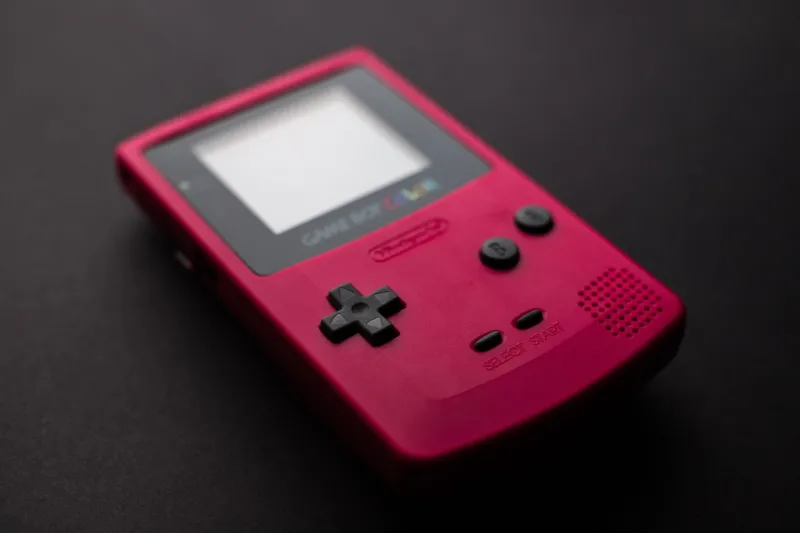
There's a certain irony in the fact that the Game Boy — a device Nintendo designed to be nearly indestructible, famously boring to look at, and cheap enough for a middle schooler's allowance — has become one of the most obsessively customized pieces of gaming hardware ever made. Walk through any retro gaming meetup in the US right now and you'll spot them: Game Boys glowing with crisp, backlit IPS displays in colors the original hardware never dreamed of, wrapped in translucent shells, loaded with rechargeable battery mods, and running games with a clarity that would have seemed like science fiction in 1989.
The Game Boy modding scene didn't happen overnight, but over the last five or six years it has absolutely exploded. What started as a niche corner of the internet — a few determined hobbyists swapping capacitors and hunting down aftermarket parts — has grown into a full-blown ecosystem with dedicated retailers, YouTube tutorial channels pulling millions of views, and Discord servers with tens of thousands of members trading tips at all hours.
So what's driving it? And why this device, out of all the classic hardware collecting dust in attics across America?
The Screen Problem That Started Everything
If you played a Game Boy as a kid, you remember the screen. That washed-out, greenish, completely unlit display that required you to tilt the device at a precise 47-degree angle toward a lamp just to make out what was happening on screen. It was the defining frustration of a generation of handheld gamers, and it remained unsolved for decades after the system left shelves.
The IPS screen swap changed all of that. Modern IPS LCD panels — the same technology in your phone and laptop — can now be fitted into original Game Boy housings with varying degrees of difficulty depending on the model. The results are genuinely jaw-dropping. Crisp, vibrant, evenly lit displays that make classic games look better than they ever did in any official Nintendo product. For a lot of people in the community, that single upgrade was the gateway drug.
"I bought my first IPS kit for a GBA SP back in 2019," says Marcus, a collector and modder based out of Austin, Texas who runs a small side business building custom units. "I'd done basic electronics work before, but the moment I powered that thing on and saw Metroid Fusion looking that good, I was done for. I immediately ordered parts for three more builds."
Marcus isn't unusual. The IPS screen mod has become the entry point for thousands of collectors who might otherwise have been happy just keeping their original hardware on a shelf. Once you've done one screen swap, the next logical step is the shell. And once you've done the shell, you're looking at audio amplifier boards, USB-C charging mods, and before long you're sourcing custom-machined buttons from small shops in the Pacific Northwest.
The Economics of the Mod Market
This isn't just a hobby — it's a legitimate micro-economy. Retailers like Retro Game Repair Shop and Hand Held Legend have built real businesses around supplying the community with parts, and the secondary market for fully modded units has become surprisingly robust. A stock original Game Boy in decent condition might fetch $60 to $80 on eBay. A professionally modded unit with an IPS screen, USB-C charging, and a custom shell? You're easily looking at $150 to $250, sometimes more depending on the builder's reputation and the quality of the components.
That price ceiling has attracted a new kind of participant to the scene: the builder-for-hire. Small operations, some run out of spare bedrooms, are churning out custom Game Boys to order, often with weeks-long waitlists. It's cottage industry stuff, but it's real commerce built entirely around a 35-year-old toy.
The component supply chain is its own fascinating story. Many of the best IPS kits are manufactured in China and sold through a network of international resellers, which creates occasional quality control headaches and counterfeit concerns. The community has developed informal rating systems and vetting processes to navigate this — forums and Discord servers where members post detailed teardowns and flag bad batches. It's crowdsourced consumer protection, and it mostly works.
Why the Game Boy, Specifically?
This is the question worth sitting with, because plenty of classic hardware gets collected and appreciated without inspiring this level of active modification. The NES has its fans. The Sega Genesis has a dedicated following. But neither of those platforms has generated anything close to the modding culture that surrounds the Game Boy line.
Part of the answer is physical. The Game Boy's design is modular in ways that weren't intentional but turned out to be gifts to the modding community. The housing comes apart easily, the screen is a discrete unit, and the internals are laid out in a way that makes aftermarket work relatively approachable even for beginners. Compare that to, say, a Game Boy Micro, which is so compact and precisely engineered that modding it requires near-surgical skill.
But the deeper answer is cultural. The Game Boy is the handheld gaming device for a specific generation of American kids — the ones who grew up in the late '80s and through the '90s. It's Pokémon and Tetris and Link's Awakening and long car rides and dead AA batteries. The emotional attachment is enormous, and the modding scene channels that attachment into something active and creative rather than purely nostalgic.
"I'm not just preserving a piece of hardware," says Jen, a hobbyist modder from Portland who documents her builds on Instagram. "I'm making it better than it ever was. That feels like something. Like I'm giving this thing the version of itself it always deserved."
Influencing the Future
Here's where it gets really interesting: the Game Boy modding scene isn't just looking backward. It's actively shaping what modern handheld gaming looks like.
Devices like the Analogue Pocket — a premium FPGA-based handheld that plays original Game Boy cartridges — exist in direct conversation with what the modding community has been building for years. Analogue's design language, its emphasis on display quality and authentic hardware feel, reflects values that modders established long before any major company was paying attention.
More broadly, the explosion of small-batch handheld devices from companies like Anbernic and Retroid owes something to the proof of concept the modding scene provided: there is a real, paying audience for high-quality portable gaming hardware that prioritizes classic games. The modders didn't just renovate a relic. They quietly demonstrated that the market for it was bigger than anyone in the industry had bothered to notice.
For the PixelVault community, this is what retro gaming culture at its best looks like — not just reverence for the past, but active engagement with it. The Game Boy resurrection isn't a nostalgia trip. It's a living, evolving craft, and it's only getting more interesting.