Rented Forever: How Cloud Gaming Is Turning Retro Classics Into Disappearing Acts
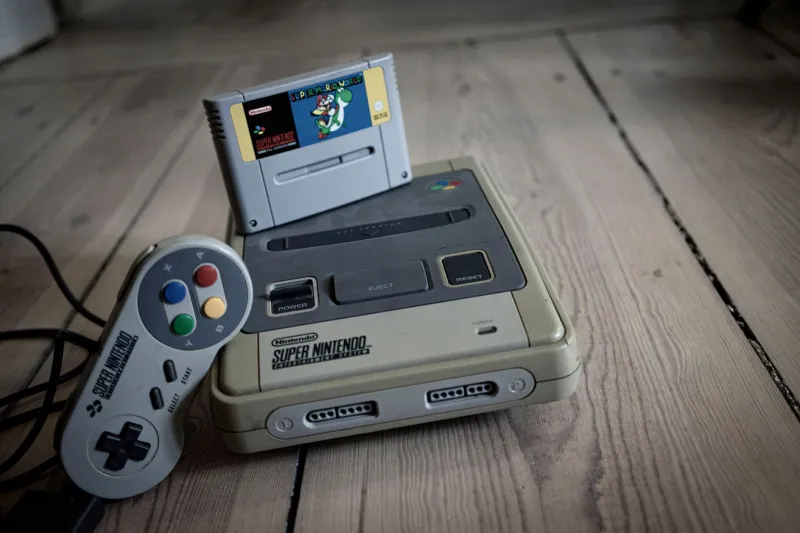
There's a particular kind of irony in the fact that a Super Nintendo cartridge from 1992 is, in many ways, more permanent than a game you streamed last Tuesday. That little gray brick survived garage sales, basement floods, and at least one sibling who definitely didn't put it back in the case. It still works. It always will. The streaming service you used to replay a childhood favorite last month? It might not be around by the time you want to revisit it next year.
This isn't a hypothetical. It's already happening. And for a retro gaming community that has spent years fighting to keep classic titles alive, the rise of cloud-based access to vintage games might be the most quietly dangerous development the hobby has ever faced.
The Illusion of Access
When Nintendo launched its Switch Online service and started bundling NES and SNES libraries into the subscription, a lot of people called it a win for preservation. Suddenly, titles that had been locked behind expensive cartridge prices or gray-market emulation were available to millions of players for a few bucks a month. Same story when Microsoft started folding classic titles into Game Pass, or when various streaming platforms began licensing retro catalogs.
On the surface, it looks like abundance. In practice, it's something closer to a mirage.
Because here's what those subscription agreements actually give you: temporary, revocable access to games that someone else controls. The moment a licensing deal expires, a publisher changes strategy, or a service decides a title isn't pulling enough engagement metrics, that game disappears from the catalog. You don't get a refund. You don't get a download. You get a blank tile where something used to be.
We've already watched this play out with digital storefronts. The Wii Shop Channel went dark in 2019, taking hundreds of WiiWare and Virtual Console titles with it. Sony's PS3 and PSP storefronts barely survived a shutdown attempt in 2021, saved only by intense community backlash — and they're still on borrowed time. Microsoft's Games for Windows Live delisted titles without warning. These weren't streaming services, they were storefronts, and even they couldn't hold the line. Cloud gaming is a step further removed from ownership, which means it's a step closer to total impermanence.
Licensing Is the Real Boss Fight
The mechanics behind retro game streaming are genuinely complicated, and they work against long-term stability in ways that cartridge ownership never did.
When a publisher licenses a classic title to a streaming platform, that deal has an expiration date. Sometimes those contracts renew. Often they don't, especially if the numbers don't justify the royalty costs or if the original rights have become tangled through studio acquisitions, developer bankruptcies, or music licensing complications. A game that includes a soundtrack tied to a third-party label is a legal minefield — streaming that music requires separate agreements that can collapse independently of everything else.
This is why certain classic titles keep vanishing from digital platforms without explanation. Scott Pilgrim vs. the World: The Game disappeared for years because of music rights. The original Tony Hawk's Pro Skater games got pulled from digital storefronts over similar complications. These weren't obscure titles. They were beloved, commercially successful games, and they still couldn't survive the licensing ecosystem.
Now scale that problem to the entire retro catalog. Thousands of games. Hundreds of publishers, many of which no longer exist in their original form. Rights scattered across corporate acquisitions and estate sales and licensing agreements nobody has fully untangled. Streaming services are trying to navigate all of that while also keeping their subscriber numbers up and their server costs down. Something is going to give, and it's not going to be the corporate balance sheet.
What Gets Lost When the Server Goes Dark
Here's what makes this especially painful from a preservation standpoint: physical media and ROM archives have already done the hard work of keeping these games alive for decades. The retro gaming community built that infrastructure through dedication, technical expertise, and a genuine love for gaming history. Streaming services are now positioning themselves as the legitimate, convenient alternative to all of that — while quietly depending on the same underlying preservation work to stock their catalogs.
But unlike a cartridge sitting in a collector's climate-controlled cabinet, or a ROM archive maintained by a preservation-focused community, a streaming library exists entirely at the pleasure of corporate decision-making. One bad quarterly earnings call, one hostile acquisition, one shift in content strategy, and an entire catalog can vanish overnight.
And because streaming encourages passive access rather than active ownership, fewer players are building the kind of personal libraries that have historically served as a distributed backup system for gaming history. Why buy the cartridge when you can stream it? The answer — the one that doesn't show up in the marketing materials — is that buying the cartridge means it's yours. Streaming means you're borrowing it indefinitely, until you're not.
The Convenience Tax
None of this means streaming classic games is inherently evil or that subscription services don't have real value. For casual players who want to dip back into childhood favorites without tracking down hardware and cartridges, the convenience is genuine. The problem isn't the technology. It's the assumption that convenience and preservation are the same thing.
They're not. They never have been. The retro gaming community knows this better than anyone, because it's spent years doing the unglamorous work of keeping games alive precisely because the convenient options kept failing. Arcade cabinets got junked. Cartridges got tossed. Servers got shut down. Every time the easy option disappeared, it was the dedicated collectors, the repair hobbyists, the ROM archivists, and the hardware modders who kept the games breathing.
Cloud gaming is asking players to trade that durability for convenience, and it's doing it at a moment when the retro market has never been more visible or more commercially valuable. That's a dangerous combination. The more mainstream retro gaming becomes, the more attractive those catalogs look to streaming platforms — and the more pressure there is to funnel players toward subscription access instead of physical ownership.
Keep the Cartridge
If there's a practical takeaway here, it's one the PixelVault community probably already lives by: physical media is still the most reliable long-term bet for the games you actually care about. Not because streaming is useless, but because ownership means something that access never quite does.
Stream the games you're curious about. Use subscription services to rediscover titles you'd forgotten. But when you find something that matters to you — something you'd be genuinely devastated to lose — find the cartridge. Find the disc. Find the hardware that plays it natively. Because thirty years from now, when whatever streaming service currently holds the rights has long since pivoted to something else, that cartridge is still going to work.
The games that survived the last three decades didn't make it because they were convenient. They made it because someone decided they were worth keeping. That's still the job. It's just gotten a little harder to explain to people who think hitting play on a subscription menu counts as preservation.