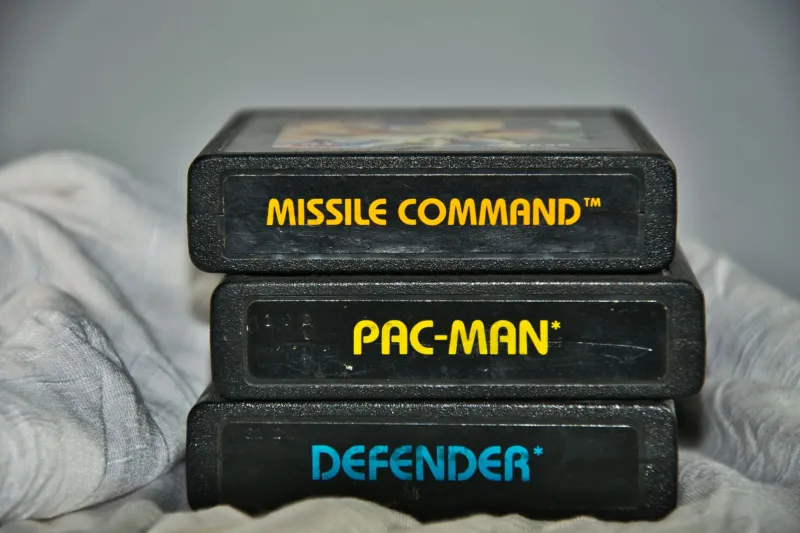
Deleted From History: How Classic Games Are Disappearing From the Web One Takedown at a Time
There's a particular kind of gut-punch that hits when you go looking for a game you loved as a kid — one you haven't thought about in fifteen years — only to find it's just... gone. No download, no stream, no legal way to experience it whatsoever. The publisher either folded, got acquired, or simply decided the title wasn't worth maintaining. The servers are dark. The storefronts pulled it. And somewhere in a legal gray zone, the fan-uploaded ROM that kept it alive for a decade just got nuked by an automated DMCA bot.
This isn't a hypothetical scenario. It's happening constantly, and most people aren't paying attention until their favorite piece of gaming history is already ash.
The Scope of the Problem Is Bigger Than You Think
A 2023 study from the Video Game History Foundation found that roughly 87% of classic games — titles released before 2010 — are out of print and commercially unavailable in any form. That number is staggering on its own. But the situation gets worse when you factor in the accelerating pace of platform closures and rights disputes that are actively pulling even the surviving 13% offline.
Wii Shop Channel? Gone. PlayStation 3 and Vita storefronts barely survived a shutdown attempt. The 3DS eShop closed in 2023, taking hundreds of digital-only titles with it. Xbox 360's marketplace is on borrowed time. Each of these closures doesn't just inconvenience collectors — it permanently severs legal access to games that exist nowhere else.
And that's before we even get into the companies that have weaponized intellectual property law against the preservation community itself.
Corporate IP Enforcement Is Accelerating the Erasure
Nintendo is the most prominent example, though hardly the only one. Their aggressive pursuit of ROM sites, fan projects, and emulation-adjacent platforms has become almost legendary in retro gaming circles. When EmuParadise — one of the internet's most comprehensive ROM archives — preemptively pulled its entire library in 2018 rather than face Nintendo's legal machine, it was a watershed moment. Millions of files representing decades of gaming history became inaccessible overnight to casual users who had no other way to play them.
Sega, Atari's various corporate successors, and a rotating cast of IP holding companies have all filed similar takedowns over the years. The pattern is consistent: a beloved archive gets a cease-and-desist, folds under the legal pressure, and the games disappear. Sometimes those titles resurface on retro compilation discs or subscription services. More often, they just vanish.
What makes this particularly frustrating is that in most cases, no one is actually selling these games anymore. The companies issuing takedowns aren't protecting active revenue streams — they're protecting the theoretical future right to monetize titles they've otherwise completely abandoned. The games are commercially dead, but legally untouchable.
The Titles Already on the Endangered List
Some losses have already happened. P.T., Konami's legendary PlayStation 4 demo, was pulled from the PlayStation Store in 2015 and has never returned — if your console dies, your copy is gone forever. The original Scott Pilgrim vs. the World: The Game spent years in licensing purgatory before a re-release finally arrived. Thousands of players never got to experience it in the gap.
Older casualties are harder to track because nobody was paying close attention when they disappeared. Countless licensed games — titles built around movies, TV shows, and sports leagues — are stuck in rights quicksand that makes re-release essentially impossible. GoldenEye 007 on the N64 spent over a decade in this exact situation. Games tied to defunct music licenses, like the Guitar Hero and Rock Band catalogs, have had entire song lists stripped out of digital versions without warning.
Right now, preservation advocates are particularly worried about digital-native titles from the late 2000s and early 2010s — games that were never released physically and exist only on platforms that are already shutting down or degrading. These are the most vulnerable, and the clock is ticking loudest for them.
What Preservationists Are Actually Doing About It
The people fighting this fight aren't waiting for corporations to develop a conscience. Organizations like the Video Game History Foundation have been lobbying the Library of Congress directly, pushing for DMCA exemptions that would allow libraries and archives to legally preserve and provide access to out-of-print games. They've had partial wins — institutions can now legally preserve certain game formats — but the exemptions are narrow and don't extend to public access in the way advocates need.
The Internet Archive has quietly become one of the most important battlegrounds in this war, hosting playable versions of thousands of classic titles through browser-based emulation. It's legally contested territory, but the Archive has continued fighting in court while keeping the lights on for games that would otherwise be completely inaccessible.
On the grassroots side, communities of dedicated archivists are racing to document, dump, and preserve physical media before hardware failure takes it offline permanently. Groups focused on game documentation — recording not just the ROMs themselves but manuals, box art, developer interviews, and historical context — understand that preservation isn't just about the file. It's about the whole cultural artifact.
Why This Matters Beyond Nostalgia
It's tempting to frame this as a nostalgia problem — grown adults getting sentimental about games they played as kids. But that framing undersells what's actually at stake.
Video games are the defining artistic medium of the last fifty years. They've shaped how entire generations think about storytelling, problem-solving, community, and competition. A teenager in 2035 who wants to understand what American culture looked like in 1995 deserves the ability to play Earthbound or Chrono Trigger or Myst the same way a film student today can watch Pulp Fiction or a music fan can listen to a 1960s Motown record. The idea that these works might simply cease to exist — not because the physical copies degraded, but because a legal structure allowed them to be erased — should alarm anyone who cares about cultural history.
Film preservation learned this lesson the hard way. Roughly 70% of all silent films are gone forever, lost to nitrate fires, neglect, and studio indifference. The gaming world is at a similar inflection point right now, except we actually know it's happening in real time.
The Vault Is Leaking
The PixelVault name means something to anyone who's spent time in this community. It's the idea that gaming history is worth protecting, worth locking away safely, worth fighting for. But right now, the vault has cracks in it — and the stuff leaking out isn't water.
Every DMCA takedown, every server shutdown, every licensing dispute that goes unresolved is another piece of gaming history sliding toward permanent inaccessibility. The preservationists are doing heroic work, but they're outgunned by the legal machinery of companies that mostly don't even care about the games they're protecting.
The best thing the rest of us can do is pay attention, support preservation organizations, and make some noise about the fact that gaming history deserves the same respect we give to film, music, and literature. Because the alternative — a future where entire decades of gaming culture simply can't be experienced — is a loss that no sequel, remaster, or nostalgia compilation is ever going to fix.