Tiny Chips, Massive Sound: The Vintage Hardware That Producers Can't Stop Sampling
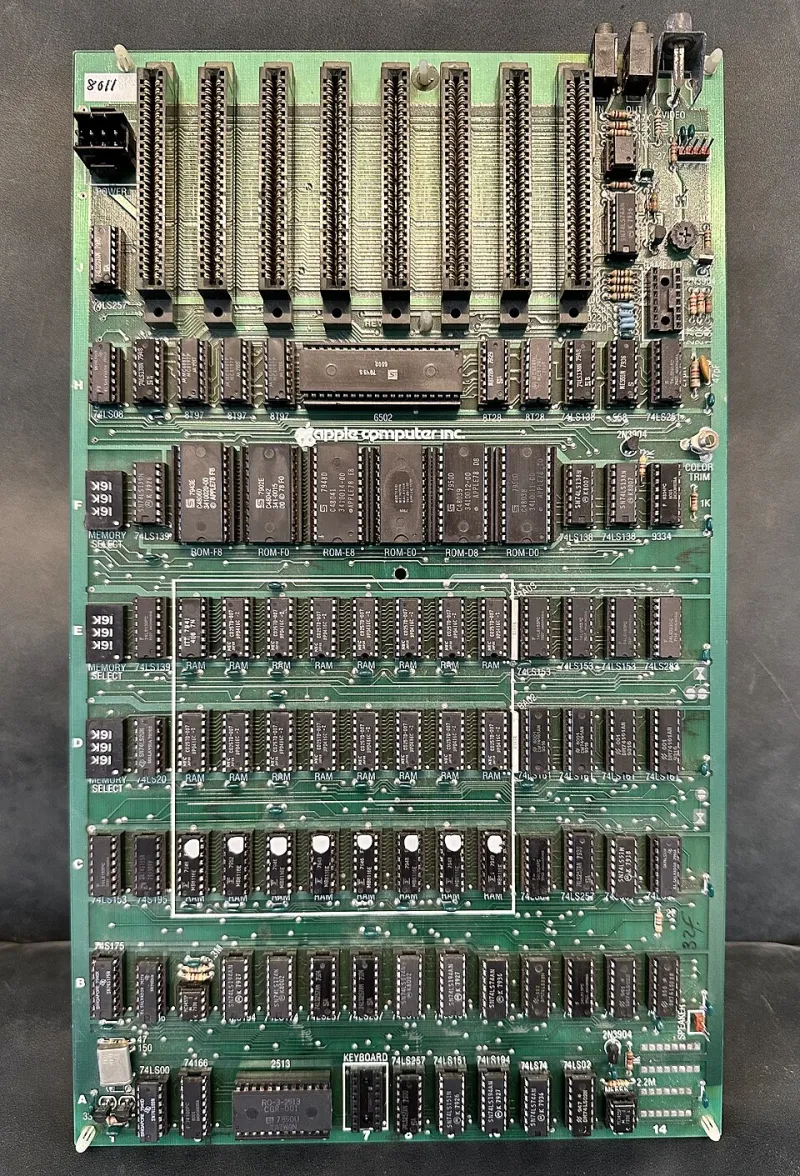
Photo: Steve Jurvetson, CC BY 2.0, via Wikimedia Commons
Pull up almost any chiptune track on Bandcamp right now and hit play. Give it ten seconds. If you grew up with a game console or a home computer in the '80s, something is going to happen in your chest — a specific, almost physical recognition. That sound isn't nostalgia exactly, though nostalgia is definitely in the mix. It's something older and weirder: the sound of mathematics doing something it technically wasn't supposed to be able to do.
The chips that made that sound are small enough to balance on your thumbnail. They were designed under brutal constraints, produced for pennies, and packed into consumer hardware that most people threw away decades ago. And right now, they are having one of the stranger second acts in music history.
Three Oscillators and a Dream
Let's talk about the MOS Technology SID chip — the 6581, if you want to get specific — because it's the one that tends to make people religious about this stuff. It powered the Commodore 64, one of the best-selling home computers in American history, and it was responsible for an entire generation of game soundtracks that somehow managed to sound lush, emotional, and technically impossible given what the hardware was working with.
The SID had three voice channels. Three. Modern DAWs can run hundreds of simultaneous tracks without breaking a sweat. The SID had three, plus a noise generator, plus a filter that behaved in ways the designers didn't fully anticipate and that composers learned to exploit like a secret weapon. The filter in particular has a character — a warmth, a slight unpredictability — that varies between individual chips because of manufacturing tolerances. Two SID chips from the same production run don't sound exactly alike. That's not a bug. At this point, it's very much a feature.
Composers like Rob Hubbard and Martin Galway turned those three voices into something that still sounds remarkable today. They used tricks — arpeggiated chords that cycle so fast the ear perceives them as harmony, carefully timed pulse-width modulation that adds movement to what should be a static tone — to create the illusion of richness from almost nothing.
That's the part that's captured the attention of modern producers: the illusion of richness from almost nothing.
The AY and the OPL Walk Into a Bar
The SID gets the most press, but it's far from the only chip worth obsessing over. The General Instrument AY-3-8910 — and its near-identical cousin, the Yamaha YM2149 — showed up in the ZX Spectrum, the Atari ST, and a pile of arcade hardware. It had a different personality than the SID: crisper, a little more aggressive, with a characteristic buzz in its square waves that became the sonic signature of an entire era of European gaming.
Then there's the Yamaha OPL series — specifically the OPL2 and OPL3 chips that powered PC sound cards through the late '80s and into the '90s. If you played DOS games during that window, you heard FM synthesis whether you knew it or not. The OPL chips used frequency modulation to generate sounds that were, in theory, trying to approximate real instruments. In practice, they produced something else entirely: a sound so specific to that era that a single OPL bass line can teleport a 40-year-old American back to a CRT monitor in a way that nothing else quite manages.
Yamaha's OPN chips — the YM2612 in particular — powered the Sega Genesis, and that's a whole separate rabbit hole. The Genesis sound chip has its own devoted following, its own quirks (the infamous "ladder effect" distortion on certain patches), and its own community of composers who treat it like a vintage guitar rather than obsolete hardware.
Limitations as Creative Infrastructure
Here's the thing modern producers keep coming back to: limitations force decisions. When you have three oscillators and a handful of waveform options, you can't procrastinate on sound design. You can't layer twelve tracks of ambient texture and hope something sticks. You have to commit. You have to be deliberate. And that deliberateness tends to produce music with a directness and personality that unlimited options often dilute.
This isn't a new observation — musicians have been saying it about analog synthesizers for decades — but the chip music community has arrived at it from a different angle. They're not romanticizing scarcity in the abstract. They're working with specific, documented, deeply understood hardware, and they're finding that the constraints of that hardware push them toward solutions they wouldn't have found otherwise.
The chiptune scene in the US has been quietly thriving for years, with artists performing live using original hardware — actual Game Boys running LSDJ, actual Commodore 64s with real SID chips, actual Yamaha FM synthesizers — rather than software emulations. There's a reason for that. The software sounds close. The hardware sounds right. The difference is subtle and completely audible.
The Hardware Hunt
For collectors, this creates an interesting situation. Commodore 64s are still relatively findable — they made millions of the things — but working SID chips are increasingly scarce and increasingly valuable. The 6581 in particular has developed a secondary market among musicians that looks a lot like the vintage guitar pedal market: specific revisions command premiums, condition matters enormously, and there are people who will pay serious money for a chip that measures and sounds just right.
Similarly, working OPL2 sound cards, functional Genesis hardware, and intact AY-based machines are all attracting buyers who aren't necessarily gamers. They're producers, composers, and hardware modders who want the real thing. This has pushed prices up on hardware that was sitting in thrift stores for pocket change a decade ago.
Some builders have responded by creating new hardware around original chips — custom synthesizers built around surplus SID or AY chips, MIDI-controllable boards that let modern musicians play vintage sound hardware from a keyboard. Others are developing FPGA-based recreations that aim to capture the analog character of the originals in programmable silicon. The debate about which approach is more authentic maps almost perfectly onto analogous debates in the guitar and synth communities.
The Sound That Won't Quit
What makes this scene genuinely interesting, beyond the nostalgia angle, is that it's producing new music. Not covers of old game soundtracks — though there's plenty of that — but original compositions that use these chips as instruments in the full creative sense. Artists are writing songs, scoring films, building live performance sets, and releasing albums on vinyl that feature nothing but hardware that predates most of their audience's parents.
The limitations that were once engineering compromises have become aesthetic choices. The three-channel constraint is a composition discipline. The analog filter quirks are a tonal palette. The manufacturing variation between individual chips is, in a very real sense, what makes each instrument unique.
The chips that powered your Saturday morning gaming sessions didn't just make sounds. They made a language. And it turns out that language has a lot left to say.