From Bargain Bin to Bank Vault: The Wild Economics Behind Retro Cartridge Prices
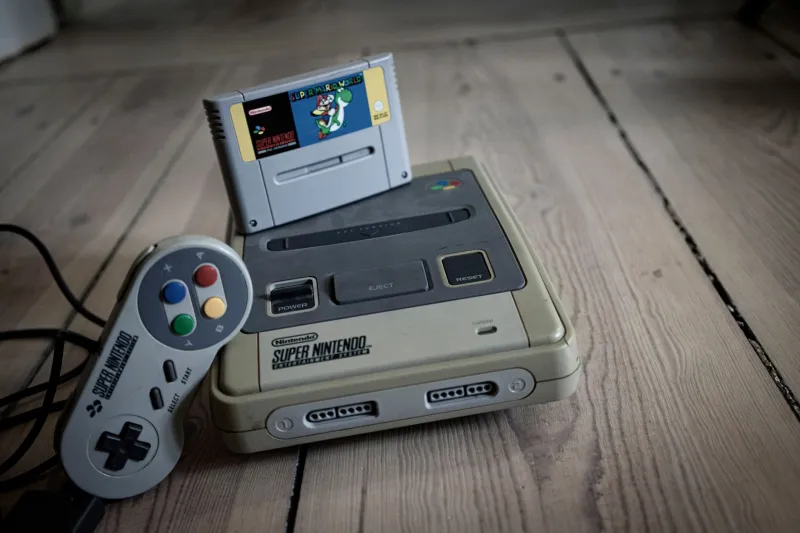
Let's set the scene. You're at a weekend flea market in suburban Ohio, flipping through a milk crate of old cartridges, and you spot a copy of Little Samson for NES buried under a pile of Madden duplicates. Your hands might actually start shaking — because that unassuming gray cart, depending on condition, could be worth somewhere between $1,500 and $4,000. For a video game. One that came out in 1992 and sold so poorly that most people have never heard of it.
This is the retro game market in 2024, and it is absolutely wild.
Prices on certain NES and SNES titles have climbed to levels that would have seemed like a punchline fifteen years ago. Panic Restaurant. Flintstones: Surprise at Dinosaur Peak. Hagane: The Final Conflict. These aren't household names — they're obscure late-cycle releases with short print runs that have become the white whales of serious collectors. Understanding why these games cost what they do requires peeling back several layers of market forces, some logical and some deeply strange.
The Simple Part: Real Scarcity Is Real
Start with the most straightforward explanation: some of these games genuinely didn't sell many copies. By the early '90s, the NES was on its way out and the SNES was taking over. Publishers releasing NES titles in 1992 or 1993 were essentially printing money into a dying format. Retailers weren't stocking shelves with enthusiasm, and consumers weren't buying in volume. Small print runs mean fewer surviving copies today, and fewer surviving copies mean higher prices when demand exists.
Regional exclusivity adds another layer. Several SNES titles were North American-only releases with no Japanese or European equivalent, which means the global collector pool is competing for a single regional supply. Games like Earthbound had notoriously poor initial sales in the US — Nintendo even ran a "scratch and sniff" ad campaign to try to move units — which contributed to limited production beyond the initial run. Today, a complete-in-box copy of Earthbound routinely clears $500 to $800, and that's considered almost reasonable compared to some alternatives.
Condition matters enormously here, too. A loose cartridge is worth a fraction of what a complete-in-box copy commands. Add a sealed, unplayed copy into the equation and you're in a completely different financial universe.
The Complicated Part: Grading Changed Everything
If real scarcity explains some of the price inflation, the rise of professional grading companies explains much of the rest — and this is where longtime collectors start to get visibly frustrated.
Wata Games and VGA (Video Game Authority) began applying the coin-collecting model to cartridges: submit your game, get it evaluated for condition and authenticity, receive it back sealed in a hard plastic case with a numerical grade stamped on it. On paper, that's a reasonable service that adds transparency to transactions. In practice, it turbocharged speculation in ways that fundamentally altered the market.
Heritage Auctions started hosting dedicated video game sales around 2019 and 2020, and suddenly sealed, graded copies of games were selling for prices that made headlines outside of gaming circles. A graded copy of Super Mario Bros. sold for $660,000 in 2021. That number got picked up by mainstream financial outlets, which attracted a wave of buyers who had no nostalgic attachment to the games whatsoever — they were treating cartridges as alternative assets, the same way someone might buy a rare sneaker or a sports card.
Marcus Hale, a collector based in the Chicago area who has been buying and selling retro games since the early 2000s, watched the transition happen in real time. "Before grading companies became a big deal, the market was mostly enthusiasts," he explained. "People paid fair prices based on actual rarity and demand from people who wanted to play the games. When investment buyers flooded in, prices on sealed stuff went insane. And it wasn't always rational."
He's right that it wasn't always rational. Some titles saw price spikes that had nothing to do with scarcity and everything to do with momentum. If a game sold for a record price at auction, it generated coverage, coverage generated interest, and interest pushed prices higher — a feedback loop that had more in common with meme stocks than anything resembling fundamental value.
How to Tell Real Rarity From Inflated Hype
So how does a collector navigate this without getting burned? A few practical frameworks help.
Check production data where it exists. Some publishers have released historical sales figures or print run estimates over the years. Cross-reference what you find with databases like Price Charting, which tracks historical sale prices across eBay and other platforms. A game with documented low production numbers and consistent long-term price appreciation is a very different animal from one that spiked suddenly and then plateaued.
Separate loose from graded markets. The graded, sealed market and the loose cartridge market operate almost independently now. If you're a player-collector who actually wants to experience the game, loose prices are far more grounded in reality. The sealed market is increasingly speculative and should be approached with corresponding skepticism.
Watch for artificial demand signals. When a game gets featured in a YouTube video by a prominent collector or appears in a mainstream "most expensive games" list, prices on that title often jump within weeks regardless of actual scarcity. That's momentum buying, and it's not always sustainable. Prices on several high-profile titles cooled noticeably in 2022 and 2023 after the peak speculation frenzy subsided.
Regional variants are a rabbit hole. Some collectors focus specifically on regional label variations, revision numbers, or specific manufacturing runs of the same game. A first-print copy of a title can command a premium over a later pressing even when the content is identical. This is a legitimate area of collecting, but it's also where things can get extremely granular and expensive very fast.
Is the Bubble Deflating?
The honest answer is: partially, and unevenly. The absolute ceiling prices for sealed, graded copies of iconic titles have come down from their 2021 highs. Some of that was market correction after the investment-buyer wave receded. Some of it was the result of scrutiny around grading practices — Heritage Auctions faced pointed questions about relationships between consignors and buyers that raised transparency concerns.
But the floor for genuinely rare titles hasn't collapsed. Games that were always hard to find — the late-cycle NES releases, the low-print SNES titles — are still expensive because the underlying scarcity hasn't changed. Speculation inflated prices above what the market could sustain, but it didn't eliminate real rarity.
For collectors building a library they actually intend to play and enjoy, the current moment might actually be reasonable. Loose prices on mid-tier titles have softened. The frenzy of 2020 and 2021, when even common games were selling above guide value because everyone suddenly wanted a piece of retro gaming, has cooled considerably.
The cartridges that cost more than a used car? Those will probably keep their value, because genuine scarcity doesn't disappear when hype does. But the games that got swept up in speculation without a real rarity foundation — those are the ones worth approaching carefully.
The PixelVault rule of thumb: buy what you love, understand what you're paying for, and never let someone else's auction result convince you that a common game is secretly a treasure. The vault is worth building, but build it with your eyes open.