Lock It Down: The Serious Collector's Guide to Building a Bulletproof Retro Game Vault
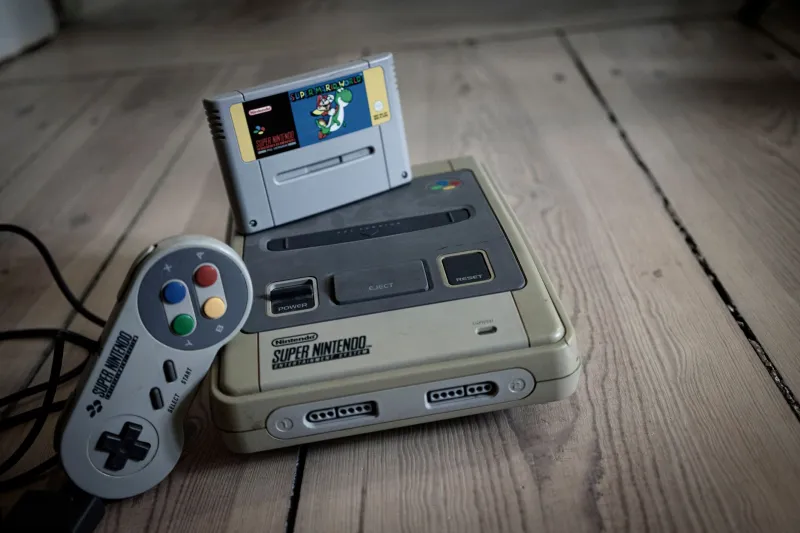
Let's be real for a second. That stack of cartridges sitting on your shelf isn't just a bunch of old plastic. It's a time capsule. It's childhood memories pressed into silicon. And depending on what's in that pile, it might also be a serious financial investment worth protecting accordingly.
Retro game collecting has exploded over the past decade. Prices on sealed NES titles have shattered auction records. A graded copy of Stadium Events sold for over $1.5 million. Even loose cartridges for fan-favorite SNES games regularly fetch hundreds of dollars on eBay. The hobby has grown up, and with that growth comes a whole new set of responsibilities for collectors who want to keep their haul safe, authentic, and in peak condition.
So whether you're just starting to take your collection seriously or you've been hoarding carts since the '90s, here's everything you need to know about turning your game room into a proper vault.
Know What You Actually Have: The Authentication Problem
Here's the uncomfortable truth: the retro game market is flooded with counterfeits. Reproduction cartridges have gotten so good that even experienced collectors get burned. The worst offenders tend to cluster around high-demand titles — think Earthbound, Chrono Trigger, Pokémon Gold and Silver, and basically anything rare for the NES or GBA.
So how do you spot a fake?
Start with the physical cartridge itself. Legitimate vintage carts have specific screw types — original NES cartridges used proprietary "security screws" that required a special bit to open. If a cartridge opens with a standard Phillips head, that's an immediate red flag. The plastic molding, label printing quality, and even the smell of the board can tell you a lot. Authentic PCBs have a particular aged scent that reproductions simply can't replicate.
For Game Boy titles, check the battery. Original carts used soldered coin cell batteries. If the battery is held in with a clip or the solder points look fresh, someone's been inside — or it's a repo. Tools like UV lights can also reveal label inconsistencies invisible to the naked eye.
When in doubt, professional grading services like WATA Games and CGC (Certified Guaranty Company) offer authentication alongside grading. Submitting a high-value piece for grading isn't just about the grade — it's about peace of mind and provenance documentation. A graded, authenticated copy is also significantly easier to insure and resell.
Storage Solutions That Actually Work
Once you know what you've got, the next step is keeping it that way. And this is where a lot of collectors drop the ball.
Loose cartridges stacked in a bin might look charming in a YouTube collection tour, but it's a disaster waiting to happen. Cartridge labels are vulnerable to moisture, UV light, and physical abrasion. Boxes and manuals are even more fragile — cardboard is practically allergic to humidity.
For loose carts, invest in individual plastic protectors. Universal cartridge cases are widely available and prevent label damage from handling. For boxed games, acrylic box protectors are the gold standard. They're UV-resistant, snug-fitting, and make your shelf look absolutely incredible as a bonus.
For sealed games or graded slabs, keep them off open shelving entirely. A display case with UV-filtering glass or acrylic panels protects against light degradation — one of the most underestimated enemies of vintage game preservation. Direct sunlight will fade a label in months. Even ambient indoor light causes slow, cumulative damage over years.
Climate Control: Your Collection's Best Friend
Temperature and humidity are the silent killers of retro game collections. Ideal storage conditions sit between 60–70°F with relative humidity between 45–55%. Go too humid and you're inviting mold, label separation, and PCB corrosion. Go too dry and plastic becomes brittle, paper warps, and adhesives fail.
If your collection lives in a basement or garage, a dedicated dehumidifier is non-negotiable. These spaces are notorious for moisture fluctuations, especially during summer. Pair it with a digital hygrometer (they're cheap on Amazon) to monitor conditions continuously. For extra-valuable pieces, small silica gel packets inside storage containers add another layer of protection.
For the serious collector, a dedicated climate-controlled room or cabinet is the ultimate solution. It sounds extreme until you realize you're sitting on a collection worth thousands — or tens of thousands — of dollars.
Don't Sleep on Insurance
This is the part most collectors skip until it's too late. Standard homeowners or renters insurance policies typically cover personal property, but "collectibles" are often either excluded or capped at a frustratingly low dollar amount. A $50,000 game collection might get you a $2,500 payout under a basic policy. That's not a typo.
Specialty collectibles insurance is the answer. Companies like Collectibles Insurance Services (CIS) offer policies specifically designed for gaming collections. Coverage is typically based on documented value, which means you need to do the homework first.
Build a detailed inventory. Photograph every item, document condition grades, note purchase prices and current market values. Tools like the VGPC (Video Game Price Charting) database make this easier than it used to be. Store your inventory documentation somewhere separate from your collection — cloud backup is ideal.
For graded games, the WATA or CGC certification number serves as additional documentation. Keep records of all significant purchases, including receipts and any correspondence with sellers.
Theft Prevention: Think Like a Thief
A valuable collection is only as safe as its security setup. If your games are visible through a window or you've posted detailed collection tours on social media with location tags, you may have inadvertently done a thief's homework for them.
Keep the existence of high-value items relatively low-profile in person. For physical security, a dedicated locked cabinet or room adds friction that deters opportunistic theft. A home security system with monitoring — brands like Ring, SimpliSafe, or ADT — is worth the monthly fee when your collection could fund a car.
For the absolute highest-value pieces, a fireproof safe is worth considering. Fire and water damage from sprinkler systems destroy more collectibles than theft does, statistically speaking.
The Long Game
Building a retro game collection is one of the most rewarding hobbies in gaming culture. But treating it casually when real money and irreplaceable history are on the line is a mistake collectors only make once. Authenticate what you buy, store it properly, control your environment, insure your investment, and lock it down.
Your future self — and your future collection's value — will thank you for it.